LIGHT ME UP BY PILOT LIGHT
Musings, reflections, outrage, activism, heartbreak, wonder, curiosity, rabbit holes, life and love from the writing of Polly and Zoë.

Let’s be clear. I’m an optimist, on the really high side, that glass is full and it is about to fill your glass too. My optimism is built on two things: an expansive secular embrace of spirituality where I train myself through meditation and yoga practice to be present, grateful and accepting of what is; and some practical realism - in all situations I like to get some facts, do some self-reflection, add courage over comfort, and then optimistically deal in the now.

From the beginning of my tattooed life, people have been asking me what they all mean, as though each tattoo had to be a talisman of a secret inner narrative, or an ode to some super meaningful story just waiting to be told.

I think that’s a sane and fair question. Just roam through any book store, or scroll about an online seller and you’ll shudder at the number of hopes, dreams and ideas crammed between pages generally to be bought by staggeringly few, and read by even fewer still. A labour of love that may take a decade to write, the reader may consume in an afternoon, tossing it aside with a casualness that would feel like violence to the writer. The imbalance, the lunacy, the daring makes me want to vomit.

My 12-year-old daughter was in her school playground at lunchtime, and an old man in an overlooking apartment stood naked watching her, masturbating. That afternoon I sat with her in the police station as she explained what had happened with fat tears sliding down her face. Then the social fall out, girls at her new school telling her she'd made it up, labelling her a drama queen. Until the following week, when he did it again. Many saw - but no charges were pressed as apparently his wife was home both times.

My life is very full, I co-run a company, I have four children, I’m a wife, I take care of my friendships, and I live in a city without any relatives to support us. I’m not complaining, I love my big life, everyone is healthy, we have food in our cupboard, there is so much to be grateful for, but sometimes it’s frightening, and I feel lonely. As if with one slip everything will tumble off a cliff.
Recently a constellation of events knocked me over, and it took me a few days to clearly identify what I was feeling. Anger. And below that masking emotion, was a broiling ocean of fear. It was helpful to have things correctly labelled, but it didn’t enable me to free myself.

Professor Mohamad Abdalla is the Director of the Centre for Islamic Thought and Education at the University of South Australia. The pleasure of hearing him speak in an audience of leaders across sectors about interconnectedness was a profoundly transformative experience – humbling and inspiring all at once. Mohamad is a storyteller of the first order and took the audience on a journey of the history of intersection between the ancient Islamic world and Western thought all the way through to the aftermath of Christchurch.

I recently gave a closing keynote on Complexity + Leadership at a leadership symposium. Complexity, and how to lead in it is a hot button topic as organisations big and small, corporate, public and not-for-profit struggle to adapt to the rapidly changing environment in which they operate. It’s not just the workplace either. Every part of our lives is more complex than it once was, and the result is more stress, more churn, more conflict, and the sense that our existence is an anxious netless highwire.

Buddhists have a word to describe a place of seeking that I suspect will be an a-ha moment of relief for many people. It certainly was for me when I came across it in author and yogi Stephen Cope’s excellent book The Wisdom of Yoga. That word is ‘samvega’. Cope, quoting Buddhist monk Thanissaro Bhikkhu, describes samvega as three clusters of feelings occurring simultaneously: shock, alienation and dismay at the futility and meaninglessness of life.

Impermanence and interdependence in business is a good thing: here’s how and why. Part of the difficulty for many people in starting up a new business or bringing their ideas to market is that there is a fixed idea of what they are providing, the pathway that will get them there, and the customer whose problem they are solving with their (and by ‘their’ I mean ‘your’) genius. None of this is wrong, and traditional approaches to business planning focus strongly on having these elements and answers in place prior to market entry.

The eight worldly dharmas is a Buddhist concept that so speaks to our current global situation in a macros sense, and our individual struggles in a micro one. Unlike the juicy good Dharma which is us finding our jam and delivering our gifts to the world, the eight worldly dharmas are in that perfect paradox of so many philosophical concepts, the coupling of shame, fear and desires that keep us stuck in suffering and ego. They are practically the blueprint to the base note of addictions, and drive that painful cycle in so many subtle ways.
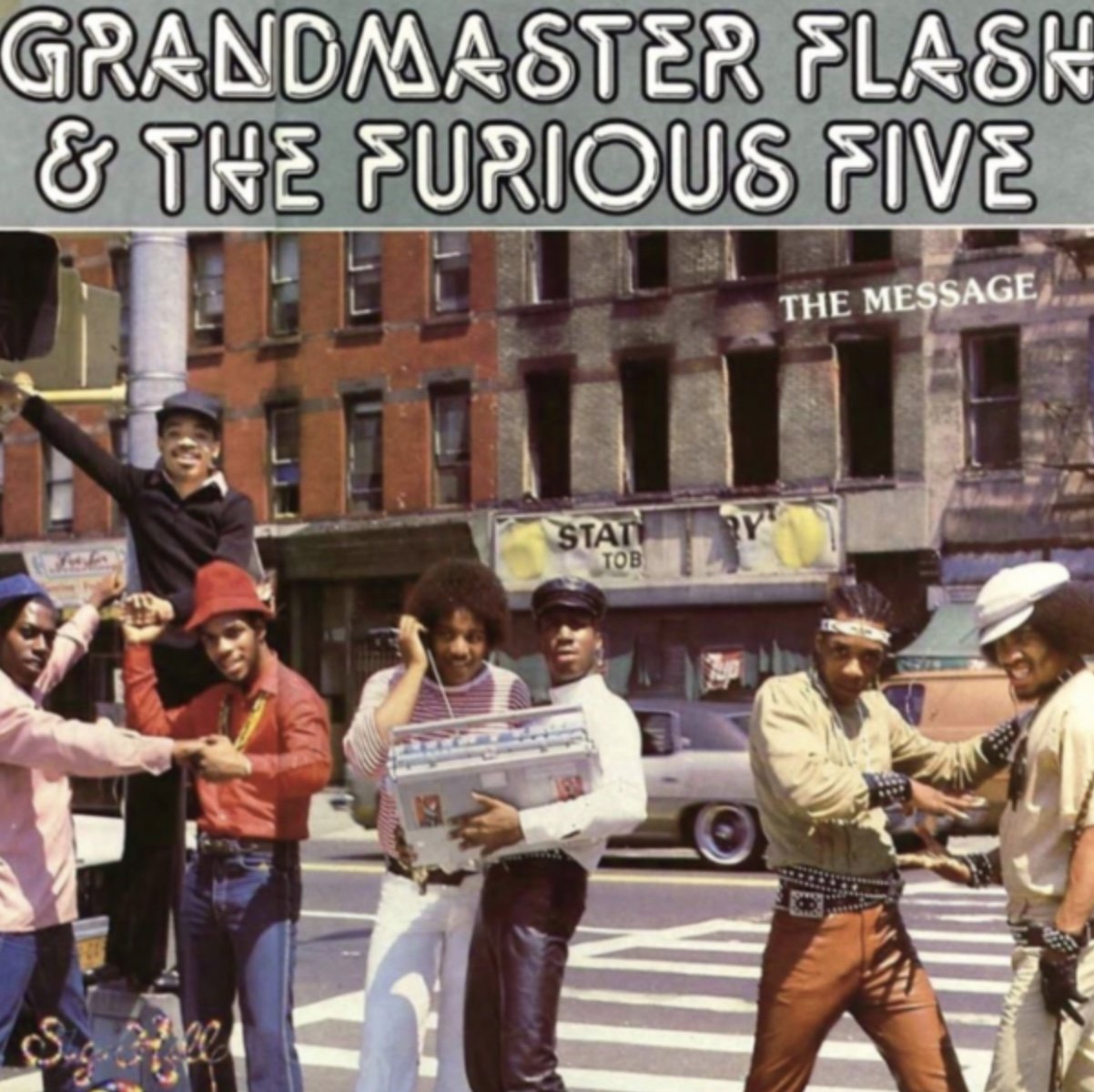
Back in 1982, Grandmaster Flash and the Furious Five released a song called The Message. It's regarded as the first rap song to have politicised the situation unfolding in the boroughs of NYC, and the escalating epidemic of crime, drugs and gangs that was destroying predominantly black and lower socio economic communities. The Message was one of those moments in music that enshrined genre and culture at the beginning of a time of change in how we consumed sound with video, and the use of technology to create beats and loops.

Back somewhere in the 80’s electronica performance world of the US, Laurie Anderson released the song/spoken word ‘Language is a Virus.’ Like all her work, it was way before its time and speaks to a condition of self-cherishing that is only amplified by our ever navel-gazing social vortex. As it was then, so it is now, and will be forever potentially, as the samsara of our own humanity is where all suffering comes from.

This isn’t about good men, or a shortage of good men, or another feminist rant about the intolerable state of abuse towards women (haha mini rant boom!) in fact that headline is nothing more than a poor attempt to combine 90’s popular culture and a film title that included good and men. For the win!
Only in adulthood have I recognised the importance of boundaries. I grew up in a beautiful but also enmeshed relationship with my mother. For those of you that don’t know what that means, and I had to have it spelt out to me by a therapist and my husband; enmeshment is a description of a relationship in which personal boundaries are permeable and unclear. This often happens on an emotional level in which two people ‘feel’ each other’s emotions.

Do you know the difference between shame, guilt, humiliation and embarrassment? Such primary emotions and yet for some of us we can’t separate them. And if we don’t understand our emotions, self-awareness and behavioural change become impossible.

I saw a friend in the street the other day that I hadn’t seen for a while. I almost kept walking, she looked so different it took my eyes and brain a moment to connect. When we spoke, she was in a deeply vulnerable space, her armor was all gone, and all that was left was the shimmering and quivering beauty of her turning up her face as it really is.

Since recorded history, humans have been telling, or being told stories. Our first memories are of the oral histories our parents, families and guardians pass on to us. These narratives form our language at the same time as they build our values and our essential understanding of the mysteries of the world and our place in it. You might think as an adult that your storytelling is limited to the explicit narratives with which you engage, like books, newspapers, film and TV. In reality: storytelling runs the world, and operates in business and in your life in the same way.

In her excellent book Big Magic, Elizabeth Gilbert recounts reading a blog by writer Mark Manson, he of The Subtle Art of Not Giving A Fuck who said that the secret to finding your purpose in life was to answer the one big question: ‘What is your favorite flavor of shit sandwich?’ It’s a crude analogy for what is an often unspoken truth—every pursuit in life comes with some unpalatable side effects, no matter how much Passion and Purpose sauce you’ve ladled on.

I’m often asked about my meditation practice. It’s been one of my key tools in changing my neural pathways, re building reaction, and enabling me to be more present, more focused, and more compassionate. I advocate these as leadership goals, but many people have a very false idea that meditation needs a quiet mind and a still body. Nope. Not neither. For many of us who are A type personalities in big, fast moving jobs, it’s easy to see why this feels unattainable. Why even bother?
Being a parent is a humbling experience. I often find my children ask questions of me that require me to actively refine my thinking and occasionally rush back through time to my own child self and unleash some re-parenting.
Routine can feel like a prison, but it can also be comforting and stabilising. Each evening when I draw the curtains throughout my home, I feel gentle happiness, a hum of gratitude. I’m shutting up shop, battening down the hatches, folding in with my family. Another day coming to a close. Something about this shutting of the curtains moves me and reminds me to count my blessings. Research tells us that counting our blessings, or giving thanks is a deeply powerful tool for bringing more happiness into our lives.

My mother, whom I adored, died when I was in my early twenties. She had a degenerative disease of the brain, Progressive Supranuclear Palsy, PSP. It’s rare. You’ve probably never heard of it.

My advice to you is take a cigarette break. Just do it without the ciggie. Nicotine is a stimulant right? Immediately after inhalation, there is a kick caused in part by the drug’s agitation of the adrenal glands, resulting in the discharge of epinephrine or adrenaline. So why is it that smokers feel relaxed when they smoke? It’s because they are taking the time to breathe, deeply.

In June I did a ‘Living into our Values’ exercise with Dr Brené Brown in Texas. On one page was an extensive list of values and she invited us to drill down and choose two, just two, that sit at the core of who we are as individuals. She defined values as the beliefs that are most important to us, that fill us with our sense of purpose. She warned not to pick values that we wish we had, or that our parents would want us to have. She also warned not to judge our values.

I’m passionately into many things, but if I had to distil my list down to a three, they would be: love, connection and playfulness.

The Hoffman Process is an intensive week long residential personal growth retreat that helps participants identify negative behaviours, moods and ways of thinking that developed unconsciously and were conditioning in childhood.

When you feel threatened or stressed how do you behave? Do you rant and dole out blame? Do you withdraw and seethe with righteous resentment? How do you cope with feedback and/or conflict? What’s your bonkers behavioural drug of choice? Did you learn and reproduce the patterns of your parents? Or have you marched 180 degrees from their choices desperately hoping to evolve?